
INTERVIEW: Drug abuse among UNIABUJA students alarming, cuts across both genders – Ex-VC Maikudi
 Sinach
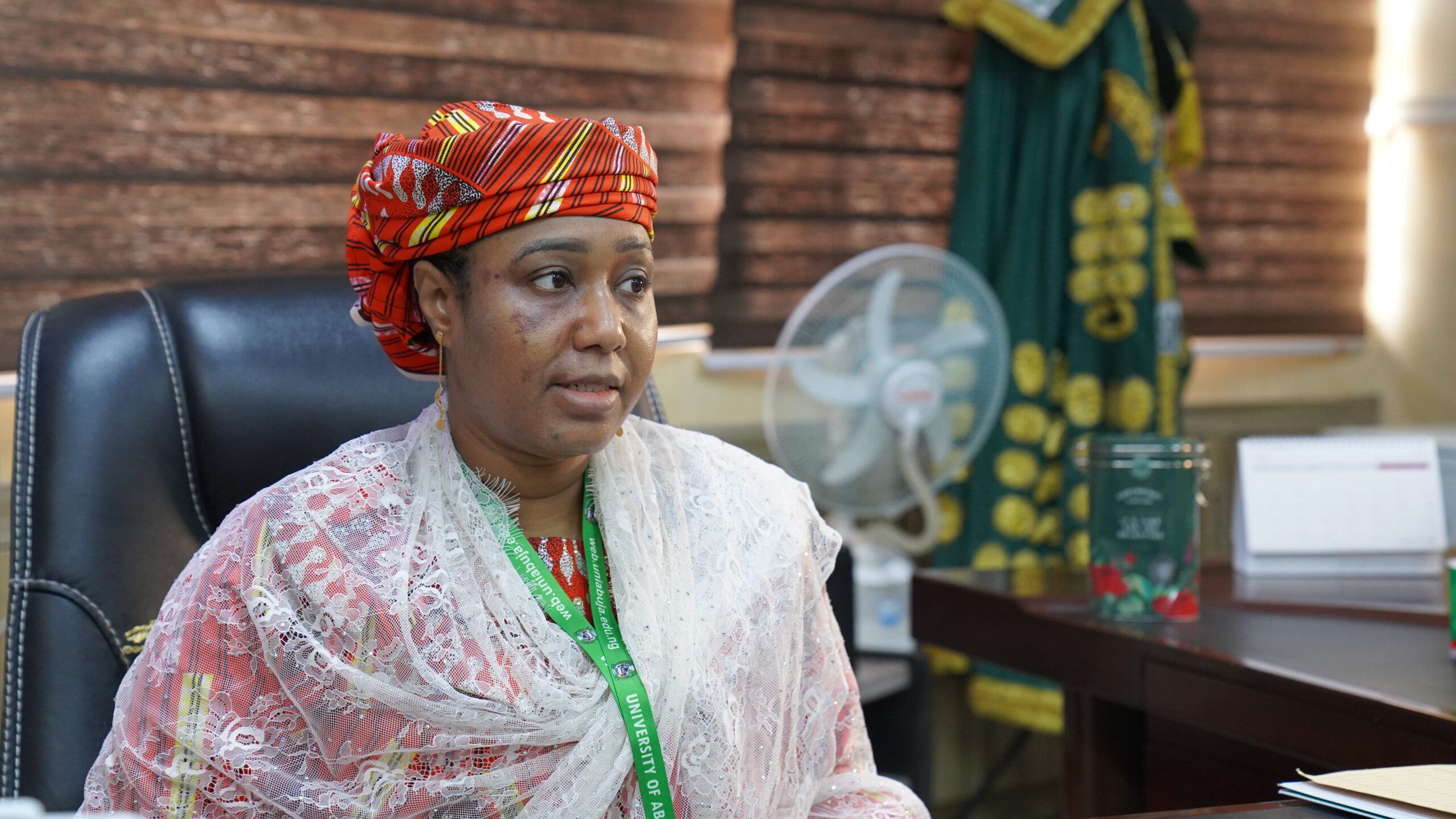
Aisha Maikudi, a Professor of Law, is the immediate past Vice-Chancellor of the University of Abuja (UniAbuja).
Aisha Maikudi, a Professor of Law, is the immediate past Vice-Chancellor of the University of Abuja (UniAbuja) now Yakubu Gowon University. In this interview conducted by journalists, a few days before her eventual removal from office by President Bola Tinubu, she spoke on critical issues affecting the institution, including drug abuse, and her journey to stardom. The mother of two broke the glass ceiling as the first female Head of Department in 2013, the first female Deputy Dean of the Faculty of Law in 2018, and the pioneer Director of the university’s International Centre in 2019. She served as the Deputy Vice-Chancellor (Academic) and introduced the ‘United Nations Law’ course on the campus in 2019. Excerpt.
NP: Could you give a brief background of who Mrs Aisha Maikudi is?
Maikudi: I started as a young person who loved reading books because I grew up seeing my father read them. Half of his bed was usually filled with books. Whenever he travelled, he brought back books for me to read. I always looked forward to that, and I would read them at a go, really fast. I am a fast reader and a fast talker as well.
I started reading John Grisham, and it had to do with laws. So, that got me interested in reading law. I was 10 years old when I gained admission into the Queen’s College in Lagos. You can imagine, all the way from the North. I lived in Kaduna but I am from Katsina State. It was such a big deal then because relatives didn’t want me to go there, but my dad said since he didn’t choose it for me, I should be allowed to go. My dad used to visit me almost every week because Lagos was the capital of Nigeria then. Also, his first cousins were Musa and Umar Yar’Adua. So I got interested in law, and when I wanted to leave, I was wondering what I should study, Law or Accounting? But I ended up studying Law in the UK. After Queens College, I moved up to Cambridge Centre for Sixth Form studies where I did my A level, then I moved on to the University of Reading where I obtained my LLB. Then I did my Master’s at the London School of Economics and Political Science and then came back to Nigeria where I went to the Nigerian Law School, did my one-year compulsory service, and then started working at the university here.
NP: What do you say about the crisis of drug abuse that is allegedly rampant on campuses in Nigeria?
Maikudi: That is a major problem on the campus here. I don’t even want to go there. As a vice-chancellor, I used to receive applications from students willing to come back to school because they used to be on drugs, and were sent home for rehabilitation. So, whenever they felt they had already received proper care or they were missing the school environment, they would apply to return.
You know what we do here is to test for drugs during registration processes for new intakes, and for those found to be positive, we take them for counselling, while those with critical cases are sent for rehabilitation.
NP: Each year, what is the average percentage of students found positive for drug use and their gender?
Maikudi: I would rather not say because it cuts across gender. It is a serious matter.
NP: But what do you think is responsible for this crisis?
Maikudi: It is a combination of many factors. Parenting, peer pressure, societal influence, and technology, among others.
You know, a lot of people want to live comfortably, and they want to make money. So they abandon their primary responsibility of providing care for their children or wards. They would go out as early as possible every Monday to Sunday and would not return until very late in the night. When family values are lost, everything suffers. And also, there is a saying that we can give birth to a child, but not to their character. Even when we put someone right and they grow up, they have peer pressure from other people they meet. As you know now, children hardly live with their parents for long. By the time they finish primary and secondary education, most parents hardly know what happens to their children again. They would move on to tertiary institutions and meet all manner of people. Peer pressure, social media from technology, both good and bad, are consumed by them.
NP: How is the university tackling this problem?
Maikudi: When I was the director of the university’s international centre, we did something with the United Nations Office on Drugs and Crime (UNODC) and National Drug Law Enforcement Agency (NDLEA). We do seminars to encourage these students to talk about the issue, and the gender centre has been doing a similar thing. We are more interested in helping them get rehabilitated. Their certificate says it’s for character and learning, so, it’s not just the learning. In fact, learning comes second because character is first.
Nigeria has a lot of work to do in that respect because our population is very youthful compared to the global trend. As much as it is a blessing, the danger is that if they are not tamed and are unleashed on the nation, the consequences would be terrible. Also, in my capacity, I have been mentoring these young ones and encouraging others to give back to the university through similar mentorship initiatives for the younger generation. I started this mentorship when I joined the system here. Turning a blind eye to it means we have no future as a people.
NP: Are you saying Nigeria is sitting on a keg of gunpowder?
Maikudi: With the youths, yes, if we turn a blind eye because they are in the majority. Beyond the universities, what more can we do to forestall the growing social challenges posed by the youths in terms of cyber fraud, prostitution, drug abuse and others?
We all have to play our roles individually and collectively. I have been doing mine. I told you when I started, we see students who we know can do better and we reach out to them, wanting to know what the problem is, and make them comfortable. Some of my students even from the first set still reach out to me and we talk. When you see someone, just smile at them. It doesn’t matter, you might be the only person to smile at the person that day.
About the Author
Sinach
A les Avocat, living with the It Begins With Me Mantra and determined to dot all i's and cross all t's for a better Nigeria.


